Preserving the Built Cultural Heritage of Our Nation
Our Cultural Heritage Sites on the Powis Estates
We are enthusiastic about our responsibility towards the preservation of the built cultural heritage sites within our care. These responsibilities range from consistent ongoing projects to protection and repair, to the award-winning restoration of historic buildings.
Of the variety of sites we look after on the Estate, some of our most significant locations consist of Ludlow Castle; an incredible example of medieval architecture, and Ty Mawr, the astonishing medieval Welsh Longhouse that was found hidden within a cowshed.
Ludlow Castle
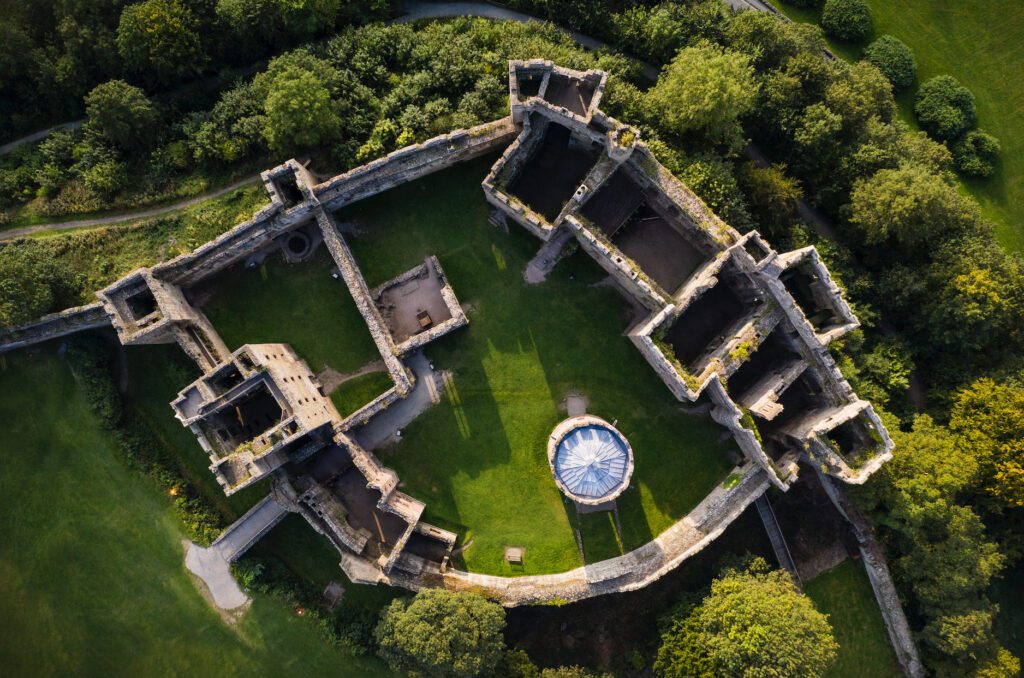
The preservation of a medieval ruin is expensive and endless, but crucially important. Ludlow Castle is a fantastic representation of how historic architecture has developed over time. A hugely important castle for all of its medieval life – both as a royal residence, a centre of judicial administration and a seat of regional government – it never fully recovered after the civil war.
Abandoned and looted of its furnishings and fittings Ludlow Castle fell into a ruinous state by 1771. Facing a possible fate of demolition, the Earl of Powis at the time, Henry Arthur Herbert, leased the castle from the crown in 1772, with the Herbert family purchasing it fully in 1811.
While the wealthy 18th-century travellers were off gallivanting around Europe on their ‘Grand Tours’, those of lesser means took to visiting the romantic ruins of Britain, and so, walks were set out around the castle to enhance the visitor experience. Thus, the castle entered a new era as a tourist attraction and today it attracts around 100,000 visitors annually.
The upkeep and restoration of historic buildings require constant vigilance to anticipate structural issues and sensitively repair where necessary. Specific materials are sourced to sympathetically preserve the fabric of the building, with some jobs requiring specialist knowledge and skills, particularly stonemasonry. One example of this type of repair can be seen in the far north-western corner of the castle where a red sandstone lintel, originating from Scotland, has replaced the original unstable one.
The Estate works tirelessly to halt the further decline of the castle’s buildings and actively aims to maintain the built cultural heritage and historic architecture of the castle far into the future. We also endeavour to solidify its relevance in the modern world as a visitor attraction by hosting events and festivals within the castle grounds, further enhancing the local economy of the town and surrounding areas.
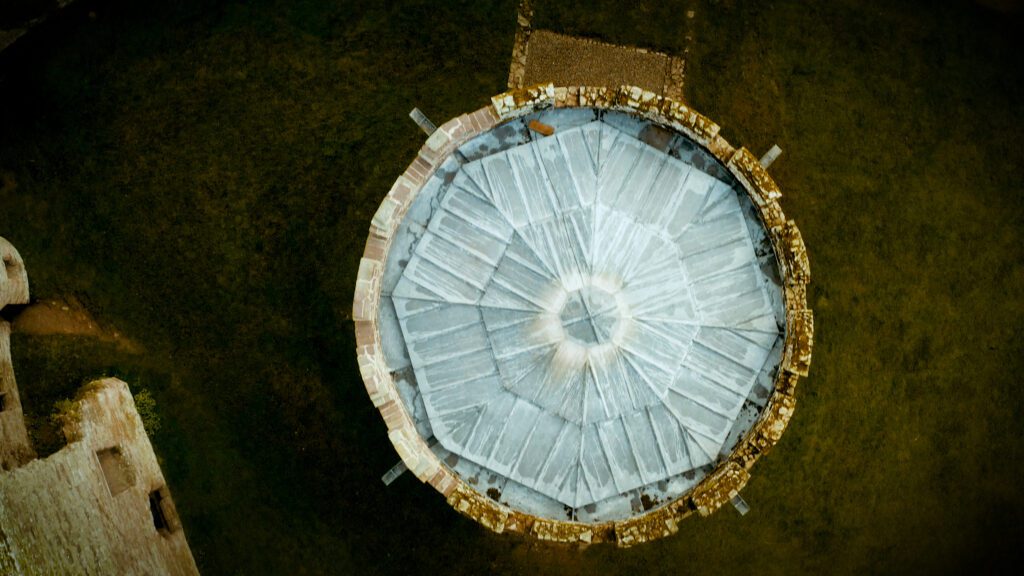
Round Chapel Roof
A 3 year historic building conservation project on the Round Chapel was part of our efforts to prevent further decay and ensure Ludlow Castles’ cultural and national significance. Working closely with English Heritage, the restoration project resulted in repaired crenellations and a spectacular roof made of oak being added to the over 900-year-old Round Chapel in 2018.
The results have protected the fabric of the building and increased its longevity for generations to come, as well as providing a unique wedding venue that can be enjoyed regardless of the unpredictable British weather.
Castle House
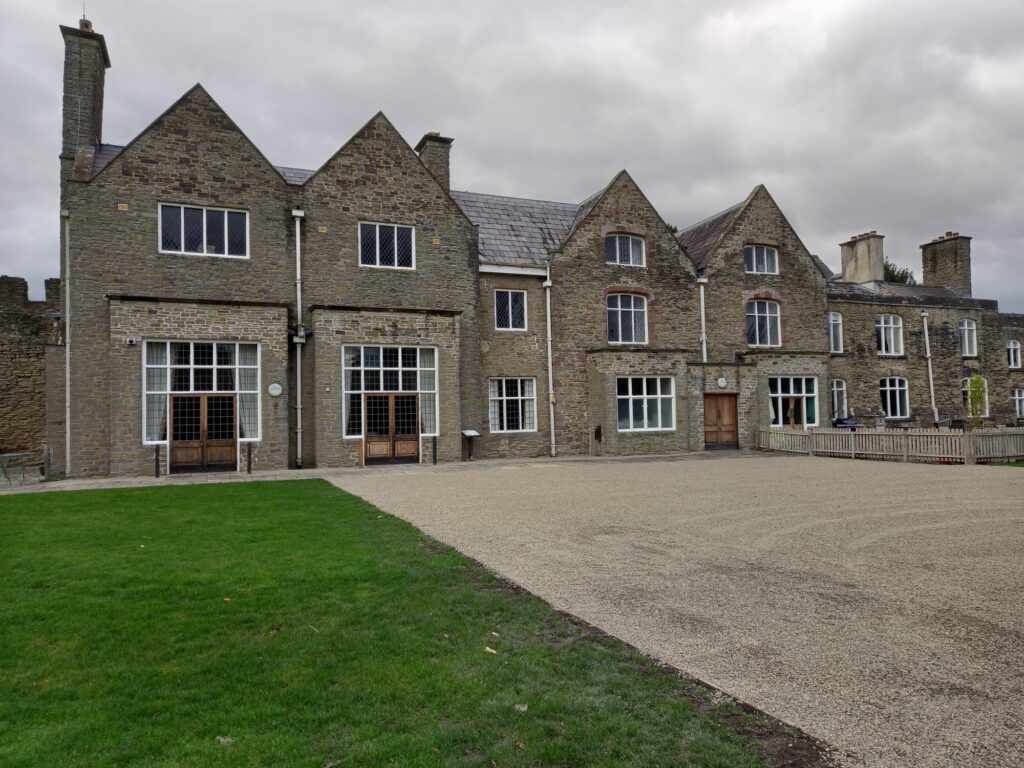
Another of the large historic preservation projects the Estate undertook was the complete renovation of Castle House.
Located within the castle walls, Castle House is a 19th-century mansion that was reacquired by the Estate in the mid-2000s. A huge renovation project was done on the building, uncovering much of its original architectural elements, as well as creating three-holiday apartments on the first and second floors and a large function room on the ground floor.
During the renovation, a charming plaster frieze was uncovered, and now restored and refreshed it conveys a classical feel to the main function room. Castle House also houses a restaurant and a gallery and takes bookings for weddings and other events. In 2009, it won the RICS Building Conservation Project of the Year Award.
Ty Mawr
Ty Mawr is a rare surviving example of a Welsh timber-framed medieval hall. Discovered within a dilapidated covered barn on the Powis Castle Estate in 1971, Ty Mawr is now one of the oldest and most interesting historic buildings in Wales.
As the building was nearing collapse by the mid-1990s, the Estate took on extensive built heritage conservation work with grant aid from Cadw: Welsh Historic Monuments. Dendrochronology dates the timber as having been felled sometime in the late 1460s, meaning the timber frame had survived remarkably, for over 560 years.
One of the serious problems the Estate faced during the historical building conservation was needing to source timber for the repair and replacement of some of the crook frames. A crook, or a cruck, is the curved timber which supports the roof of a building, used traditionally in medieval architecture. Crook timbers are taken from the junction between the crown and the trunk where it starts to curve naturally, and a matched pair from the same tree was required in this instance.
It took two years to track down the suitable timber. The search began on the Estate and then further into England, Scotland, Ireland, and even France, until as chance would have it, just weeks before the timber needed to be in place, the foresters on the Estate discovered a fallen oak over the hill from Ty Mawr that a recent storm had damaged, and it ended up being perfect.
In 2000 the house won the RICS Building of the Year Award, competing against world-famous historic architecture such as the Bodleian Library in Oxford, the Royal Opera House in London and the Sydney Olympic Stadium in Australia. It is now a Scheduled Ancient Monument, and a tenanted residence, although it is available to view by appointment only.
Please call the Estate Office to arrange a viewing.

Proud of our Historic Responsibilities
Powis Estates is proud of our heritage and it is a privilege to be the custodians of many sites of significant history on a national level. We hope you value our contribution to the preservation of the past as we continue to oversee the care of some of our nation’s natural and built heritage for everyone’s future enjoyment.
We welcome you to come and see for yourselves what we have to offer and should you wish to visit and explore please find further relevant information in the links below.